11 Quotes from Co-Intelligence book by Ethan Mollick
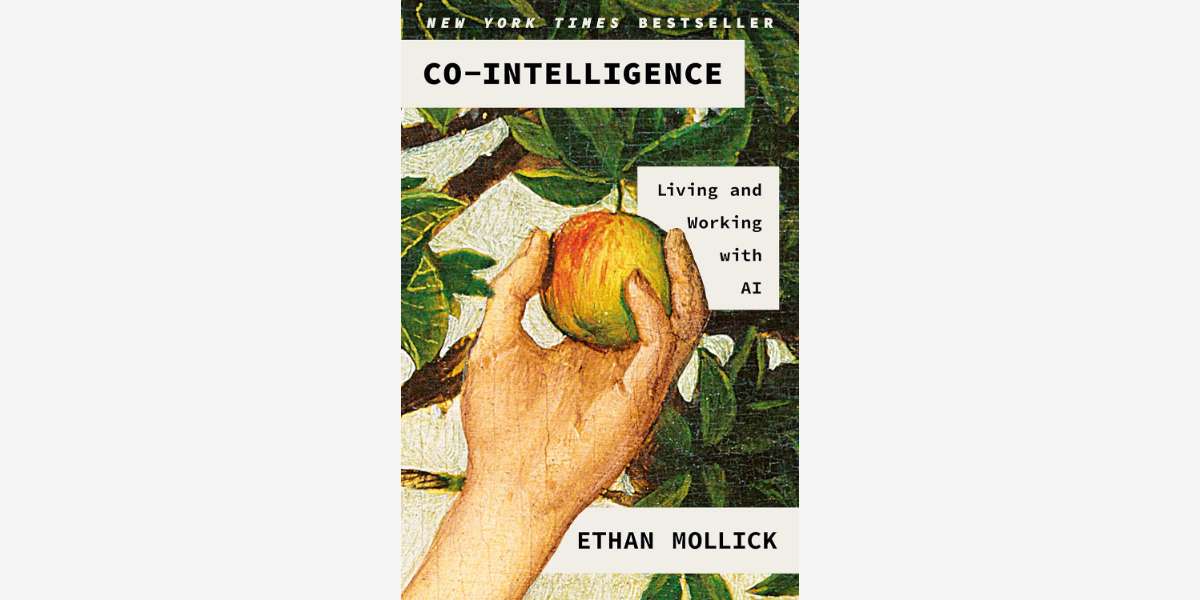
Hello and Welcome. This page is a collection of 11 quotes from Co-Intelligence book by Ethan Mollick that I underlined while reading the book. I hope you will like these quotes too.
By the way, I am Deepak Kundu, an avid book reader, quotes collector and blogger.
Quotes on Artificial Intelligence (AI)
- We have an AI whose capabilities are unclear, both to our own intuitions and to the creators of the systems. One that sometimes exceeds our expectations and at other times disappoints us with fabrications. One that is capable of learning, but often misremembers vital information. In short, we have an AI that acts very much like a person, but in ways that aren't quite human. Something that can seem sentient but isn't (as far as we can tell). We have invented a kind of alien mind.
- Humans are subject to all sorts of biases that impact our decision-making. But many of these biases come from our being stuck in our own minds. Now we have another (strange, artificial) co-intelligence we can turn to for help. AI can assist us as a thinking companion to improve our own decision-making, helping us reflect on our own choices (rather than simply relying on the AI to make choices for us). We are in a world where human decision-making skills can be easily augmented in a new way.
- There is no reason to suspect that the abilities of AI systems are going to stop growing anytime soon, but even if they do, tweaks and improvements to how we use AI will ensure that future software is far more advanced than it is today. We are playing Pac-Man in a world that will soon have PlayStation 6s. And that is assuming that AI improves according to the normal pace of technology development. If the possibility of developing AGI turns out to be real and achievable, the world will be even more transformed in the coming years.
- In the same way, power tools didn't eliminate carpenters but made them more efficient, and spreadsheets let accountants work faster but did not eliminate accountants. AI has the potential to automate mundane tasks, freeing us for work that requires uniquely human traits such as creativity and critical thinking - or, possibly, managing and curating the AI's creative output.
- It seems very likely that AI will take over human tasks. If we take advantage of all that AI has to offer, this could be a good thing. Boring tasks, or tasks that we are not good at, can be outsourced to AI, leaving good and high-value tasks to us, or at least to AI-human Cyborg teams. This fits into historical patterns of automation, where the bundles of tasks that make up jobs change as new technologies are developed.
- We have created a weird alien mind, one that isn't sentient but can fake it remarkably well. It is trained on the vast archives of human knowledge, and also on the backs of low-paid workers. It can pass tests and act creatively, with the potential to change how we work and learn; but it also makes up information regularly. You can no longer trust that anything you see, or hear, or read was not created by AI. All of that already happened. Humans, walking and talking bags of water and trace chemicals that we are, have managed to convince well-organized sand to pretend to think like us.
- The thing about a widely applicable technology is that decisions about how it is used are not limited to a small group of people. Many people in organizations will play a role in shaping what AI means for their team, their customers, their students, their environment. But to make those choices matter, serious discussions need to start in many places, and soon. We can't wait for decisions to be made for us, and the world is advancing too fast to remain passive. We need to aim for eucatastrophe, lest our inaction makes catastrophe inevitable.
More Quotes
- In study after study, the people who get the biggest boost from AI are those with the lowest initial ability - it turns poor performers into good performers. In writing tasks, bad writers become solid. In creativity tests, it boosts the least creative the most. And among law students, the worst legal writers turn into good ones. And in a study of early generative AI at a call center, the lowest-performing workers became 35 percent more productive, while experienced workers gained very little.
- There is something unique and powerful about the interaction between a tutor and a student that cannot be easily replicated by other means. So it is not surprising that a powerful, adaptable, and cheap personalized tutor is the holy grail of education. This is where AI comes in. Or where AI, hopefully, comes in. As remarkable as today's AIs are, we have not reached the point where they can replace human teachers with magical textbooks. Though we are certainly at an inflection point where AI will reshape how we teach and learn, both in schools and after we leave them.
- The closer we move to a world of Cyborgs and Centaurs in which the AI augments our work, the more we need to maintain and nurture human expertise. We need expert humans in the loop.
- As alien as AIs are, they're also deeply human. They are trained on our cultural history, and reinforcement learning from humans aligns them to our goals. They carry our biases and are created out of a complex mix of idealism, entrepreneurial spirit, and, yes, exploitation of the work and labor of others. In many ways, the magic of AIs is that they can convince us, even knowing better, that we are in some way talking to another mind. And just like our own minds, we cannot fully explain the complexity of how LLMs operate. There is a sense of poetic irony in the fact that as we move toward a future characterized by greater technological sophistication, we find ourselves contemplating deeply human questions about identity, purpose, and connection. To that extent, AI is a mirror, reflecting back at us our best and worst qualities.